Before you read a word, you've already formed an impression. You've assessed whether this is a place worth staying, whether it seems credible, whether it's speaking to someone like you. You've done this in roughly fifty milliseconds—faster than a blink, faster than a conscious thought. And you've done it entirely through visual information.
This is the unremarkable miracle of visual culture: that a set of learned associations, encoded over years of experience with the world, allows us to extract meaning from form, color, and composition at speeds that language simply cannot match. Designers work in this pre-verbal register. Their decisions shape what people feel before those people know they're feeling anything.
Understanding that power—taking it seriously rather than treating it as a technical problem to be solved—is, I think, the starting point for doing design well.
Learning to See
There's a particular kind of attention that design trains in you. It's something like the attention a musician develops for sound—not just hearing music, but being unable not to hear the structure beneath it, the intervals, the timing choices, the places where something unexpected happens and why it works or doesn't. After years of designing, I can't really look at a page, a storefront, a product, or an environment without decomposing it. The color relationships become visible. The typeface choices become audible in a way I find hard to describe. The space between elements becomes legible as intention or accident.
This is a gift with a cost. You lose a kind of innocence—the ability to simply experience a visual environment without analyzing it. But you gain something in return: the ability to see what most people only feel. And that gap between feeling and seeing is where the designer's work actually lives.

The visible surface of design work often looks deceptively simple—what you don't see are the dozens of discarded decisions that led here.
Most people experience design the way they experience grammar: functionally, intuitively, without being able to articulate the rules they're following or the patterns they're recognizing. They know when something feels off—when a restaurant's decor doesn't match its menu's ambitions, when a logo looks cheap, when a website's typography choices create an oddly formal atmosphere for a casual brand—even when they can't say exactly why. They're responding to patterns their visual cortex has catalogued without their conscious knowledge.
The designer's job is partly to cultivate that intuition to the level of expertise—to be able to name what most people only sense, and to use that naming to make better decisions. But it's also to remember that the people you're designing for aren't necessarily able to name what they're experiencing, and that what they feel about a design may be more important than what they think about it.
"What people feel about a design may be more important than what they think about it. We navigate the world on feeling first, analysis second—and design speaks to the first register."
— Maya ChenThe Weight of Accumulated Images
Visual culture isn't created in design studios. It accumulates, over decades and centuries, through the visual experiences of entire societies—through the paintings in churches, the architecture of cities, the typography of newspapers, the visual conventions of film and television, the aesthetics that became associated with movements, ideologies, eras. By the time a designer is born, an enormous amount of this accumulated visual meaning already exists, and they are saturated in it long before they pick up a sketchbook.
What does this mean practically? It means that every design choice is made against a backdrop of associations that the designer didn't create and can't fully control. A particular typeface carries the weight of everything it's ever been used for. A color palette evokes the contexts in which it's appeared before. A compositional convention carries the meaning of the tradition it belongs to—or, if it breaks with that tradition, its meaning partly comes from the break itself.
When history becomes material
This is why design research matters, and why it can't be reduced to looking at contemporary work. Understanding why a particular visual language carries the associations it carries often requires going backward—to the era that originated those associations, to the cultural context that gave them meaning, to the ways they've been transformed, subverted, or stripped of their original connotations over time.
A sans-serif typeface, for example, doesn't just look a particular way—it carries the history of modernism, of the early twentieth century's rejection of Victorian ornament, of the utopian belief that form stripped to essentials could be a form of democratic communication. When a contemporary designer reaches for a certain geometric sans-serif, they're drawing on that history, whether they know it or not. The informed designer knows it, and can use it with intention.
Visual associations are culturally and historically specific in ways that aren't always obvious. What reads as "premium" in one cultural context reads as "cold" in another. What signals "authority" in one era signals "establishment" in another. Good design research means understanding not just what visual language is available but what it means to the specific audience you're communicating with.
This is part of why cultural context matters in design more than is often acknowledged. Visual associations are not universal—they're learned, culturally specific, and historically situated. A color that connotes mourning in one culture connotes celebration in another. A composition that reads as authoritative in one context reads as corporate and cold in another. The designer working across cultural contexts has to learn these differences, not assume that their own visual intuitions generalize.
"Visual associations are not universal—they're learned, culturally specific, and historically situated. The designer's intuitions don't generalize as far as they might assume."
— Maya ChenThe Ethics of the Pre-Verbal
If design works partly in the pre-verbal register—shaping perception and feeling before conscious analysis kicks in—then it carries a kind of power that warrants ethical consideration. Not all design uses that power responsibly.
The clearest examples of irresponsible design are manipulation: visual choices designed to create urgency where there isn't any, to build false authority, to make things seem more appealing or trustworthy than they are, to exploit cognitive shortcuts in ways that harm the people being designed for. Dark patterns in interface design are one well-documented version of this—interfaces that use visual tricks to get users to do things they didn't intend or wouldn't choose if they understood what was happening.
But the ethical questions in design extend well beyond obvious manipulation. They include questions about representation—who is visible in the imagery a design uses, and what does their presence or absence communicate about who belongs and who doesn't? They include questions about accessibility—who is the design legible to, and who is it inadvertently excluding? They include questions about cultural appropriation—what visual languages is the design drawing on, and is that drawing respectful or extractive?
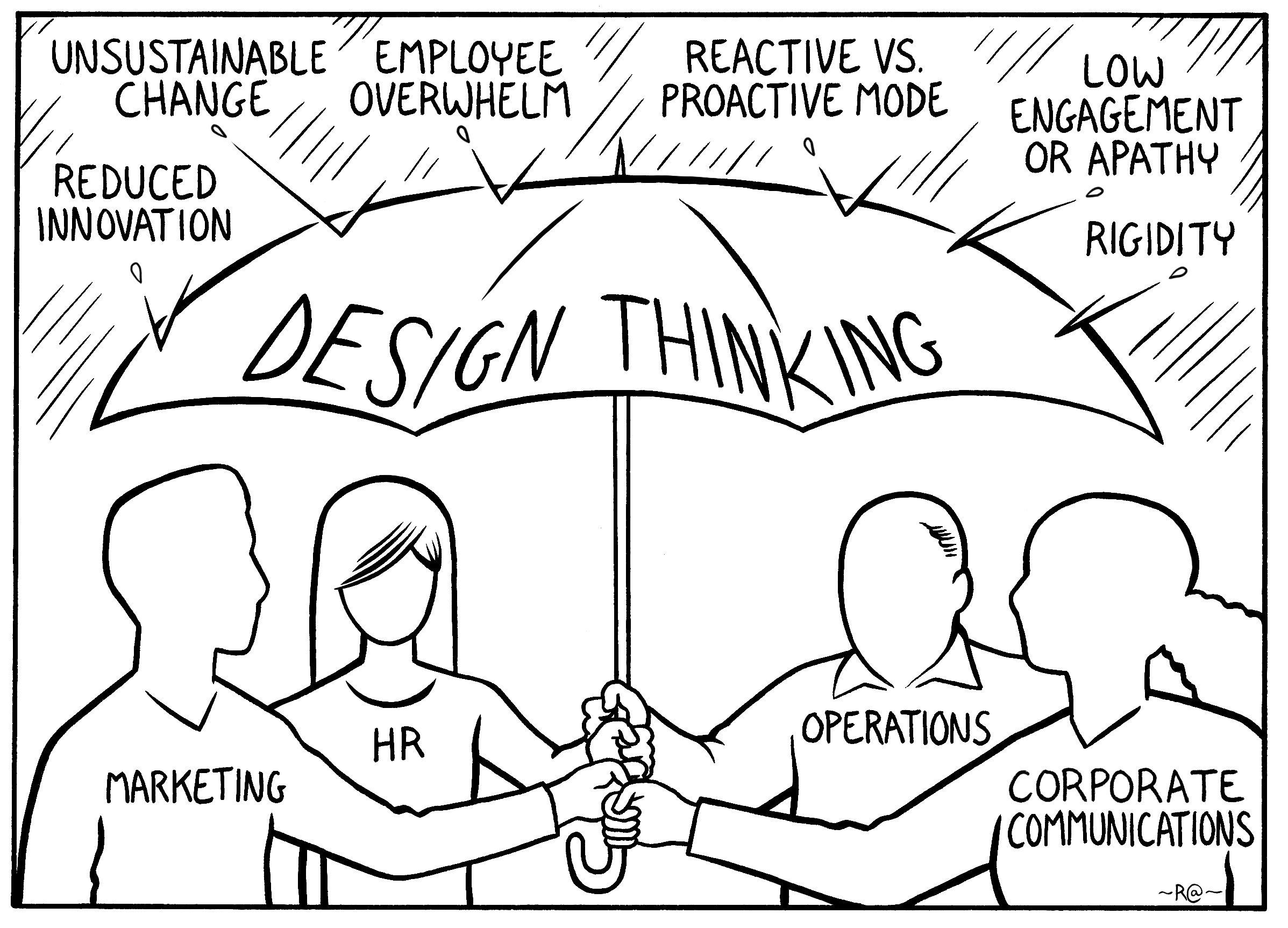
Design decisions about who's represented and who's centered shape whose experience is normalized and whose is treated as exceptional.
These questions don't have easy answers, and they don't resolve into a simple code of conduct. But they're questions that become harder to avoid the longer you work in design and the more clearly you see how design shapes the world rather than simply decorating it.
There's a version of design professionalism that treats these as someone else's problems—the client's problems, the business's problems, the culture's problems. That version is comfortable but, I think, ultimately untenable. The designer who makes visual choices that exclude, manipulate, or misrepresent can't fully disclaim responsibility for those effects by pointing to the brief. Craft carries responsibility. Using it well means understanding that responsibility and taking it seriously.
Process as a Kind of Thinking
I've been asked, over the years, to explain design process to people who work in adjacent fields. The explanation that tends to resonate most describes it as a particular kind of thinking—iterative, visual, externalizing—that's different from the linear, language-based thinking that most professional contexts reward.
Design process externalizes thinking. You make something, look at it, respond to what you see, make it differently, look again. Each iteration of the work is a hypothesis made visible, and the act of looking at it tells you things about your own thinking that pure ideation wouldn't. The sketch you make in the first five minutes of working often contains a truth that gets covered up through subsequent refinement—that's why experienced designers learn to save their early work, to go back to it when they're stuck, to remember what they thought before they knew what they thought.
This is also why design benefits from other people. Not because other people will have better ideas, necessarily, but because showing work to someone else breaks the trance of self-referential thinking. When you've been staring at something for days, your perception of it becomes distorted—you stop seeing what's actually there and start seeing what you meant to make. Other eyes correct for that distortion. Critique, when it's specific and honest, is one of the most valuable things a designer can receive, and learning to receive it without defensiveness is one of the harder professional skills to develop.
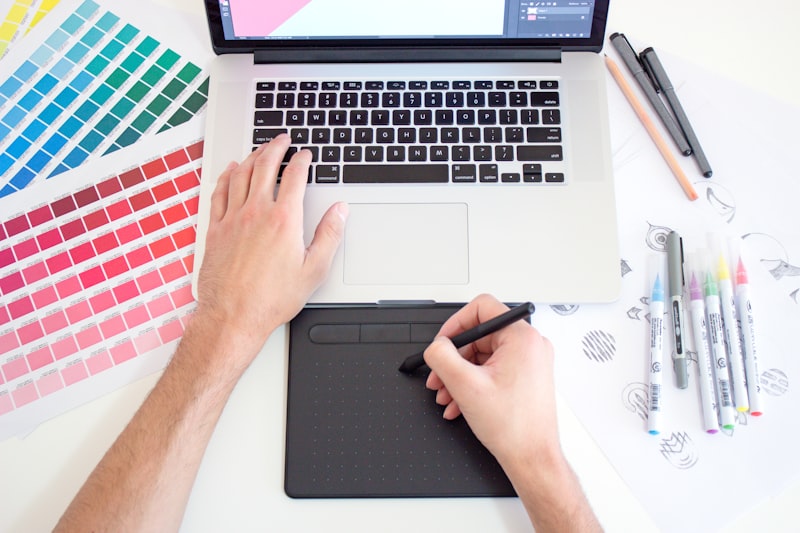

The design process also has a social dimension that doesn't get discussed enough. Design almost never happens in isolation—it happens in relation to clients, collaborators, engineers, writers, marketing teams, users. The process of making design work involves a lot of translation: between the designer's visual thinking and the client's verbal thinking, between what users say they want and what their behavior suggests they actually need, between the ideal solution and the feasible one given real constraints of time, budget, and capability.
That translation work is design work, even when it doesn't produce visual artifacts. The meeting where you help a client understand what they actually need, which turns out to be different from what they asked for, is design work. The conversation where you help an engineering team understand why a certain constraint matters, so they'll help find a way to honor it, is design work. The skill of articulating visual thinking in terms that non-designers can engage with is undervalued and under-taught.
"The meeting where you help a client understand what they actually need—which turns out to be different from what they asked for—is design work. Translation is design work."
— Maya ChenWhat Endures
Visual culture is relentless in its production of new images, new styles, new aesthetics. The pace has accelerated dramatically in the digital era—a visual trend that might have taken years to emerge and years more to become ubiquitous now moves in months. This acceleration puts pressure on design practice: to stay current, to refresh, to not look dated.
But there's a counterintuitive truth embedded in this acceleration, which is that what endures tends to be the things that are least responsive to trend. The design work that ages best is usually the work that was most deeply grounded in the particular problem it was trying to solve, rather than the style of the moment it was made in. The works of design history that we return to, that still feel relevant decades later, tend to be the ones that were doing something irreducibly specific—solving a visual problem with such precision that the solution outlasts the context that produced it.
This suggests a useful heuristic for navigating the trend cycle: ask whether a visual decision serves the specific communication problem at hand, or whether it's primarily a signal of contemporaneity. The answer isn't always to avoid the contemporary choice—sometimes the right solution happens to be on-trend, and that's fine. But the question itself is worth asking, because it keeps the focus on what design is actually for.
There's a depth of engagement with visual culture that goes beyond learning to apply its conventions—it involves understanding why those conventions exist, what problems they solve, what they say about the people who made them and the people they were made for. That depth of understanding is what allows a designer to work creatively rather than reactively, to make choices that are genuinely intentional rather than stylistically competent.
It's also what allows design to participate in culture rather than just reflect it—to contribute something new rather than recombining what already exists. The designers who manage to do that tend to be the ones who have thought hard about what visual culture is, where it comes from, and what they want their contribution to it to be. That's not a question with a tidy answer, but it's worth sitting with.
The quiet language of visual culture is always speaking, whether or not anyone is listening carefully. Learning to listen—really listen—is the foundational act of design. Everything else follows from that.